
Dr. John Goldsmith (UChicago) on Thinking Effectively with LLMs
3 Tips for Parents on How to Teach Kids to Use AI Well
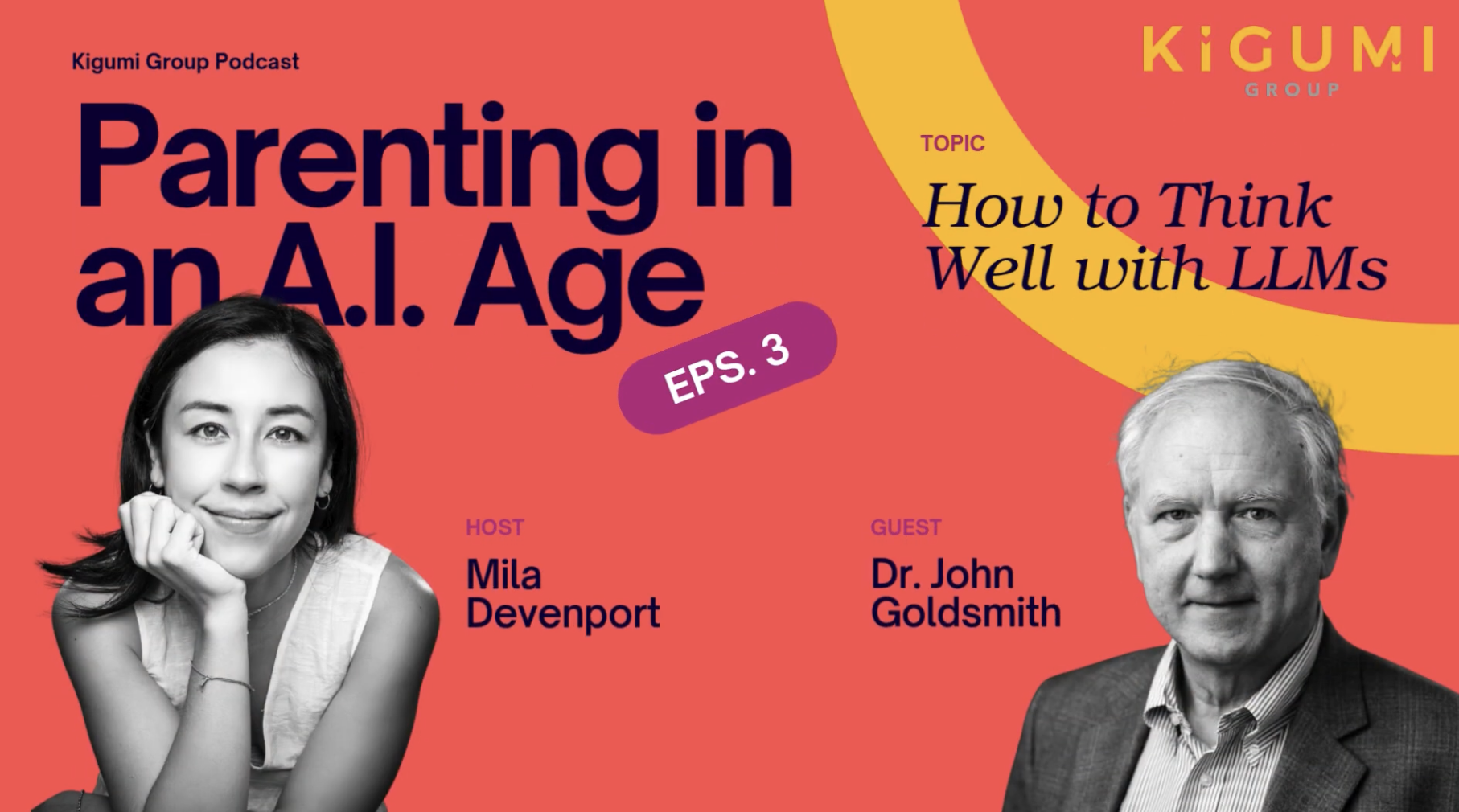
For our third podcast, I asked Kigumi academic advisor Dr. John Goldsmith to chat about how he’s currently thinking about how to use LLMs effectively as a scaffold for serious thinking and intellectual work.
Dr. John Goldsmith is the Edward Carson Waller Distinguished Service Professor at the University of Chicago, with appointments in linguistics and computer science. A graduate of MIT and Swarthmore College, he is known for developing autosegmental phonology, his research on African tone systems, and pioneering work in computational morphology and unsupervised learning. He is the author of "The Battle in the Mind Fields" and "The Chicago Guide to Your Academic Career.”
I say “currently thinking” because, despite the fact that John has spent decades studying how language and machines work, I’ve listened to his stance on LLMs actively evolve since 2019, when we first met.
Most importantly, as a University of Chicago professor emeritus who worked for a half-century in both linguistics and computer science, John has spent a lot of time thinking about how to think, and thinking about what meaningful learning looks like.
So I thought I would share some of our most recent thoughts with you, accompanied by some translations into practical educational / parenting advice for children.
How to Teach Kids to Use AI Well: 3 Tips for Parents

1. Always push back
Pushing back isn’t only about catching mistakes. It often gets you a better answer. If you challenge a first response, the AI tends to go deeper than the surface-level reply.
Tip for your family: Kids need good thinking habits before they can question a chatbot well. Make it a habit to ask in front of them “how do you know that?” often when using Google or LLMs, and make reading, discussing, and curiosity the foundation principles of your interactions at home.
2. Use it to explore, but be intentional
The worst way to use AI is to treat it as an answer-giver. Much better uses include: AI as an editor, a revision partner, or an intellectual sparring partner to challenge your current approaches. Keep the ideas you like and drop the ones you don’t, always being careful to push back and verify.
For your family: Encourage real conversations in your family about hard topics, even when there is friction or complexity. Often, the best answers are not the first ones, and it’s important to prioritise the kind of learning that happens when you don’t settle on an answer.
3. Focus on the fundamentals of “learning how to think”
Goldsmith says the most important part of education is learning how to think, not collecting activities for a long résumé. He also believes books are still essential, noting that reading books give young people the opportunity to have “a conversation” with some of the smartest people who ever lived.
For your family: An important building block of future critical thinking is literacy and a love of reading. Read every day to your child for at least 15 minutes, surround your child with a diverse array of books, check with your child’s school to see what parenting workshops they have on how to support literacy, and spend weekends at your local public library or secondhand children’s bookstore.