
Dr. Joshua Gold (UPenn) on Screens, Attention & Children's Focus
How Do Screens Affect Kids' Attention? Neuroscience Insights for Parents
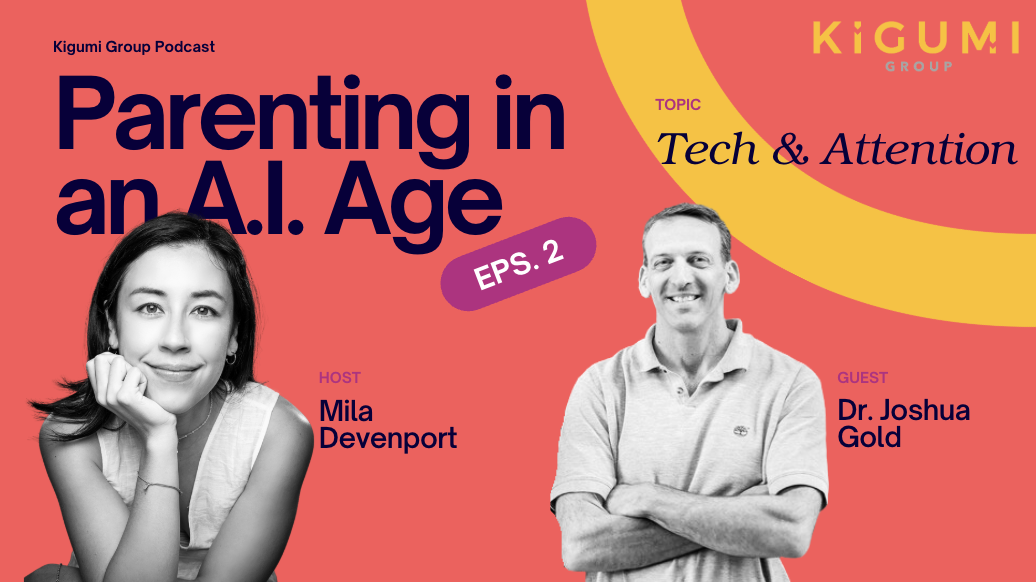
I recently sat down with Dr. Joshua Gold — Professor of Neuroscience at the University of Pennsylvania, Co-director of Penn’s Computational Neuroscience Initiative (CSI), and one of our academic advisors at Kigumi — to ask the question so many of us are wrestling with as parents and educators: is technology actually rewiring our children’s ability to focus?
I’ve been interested in attention from the very start of making our first digital wellbeing curriculum. (In fact, our “What Is the Attention Economy?” training was one of the first I made for 8-12 year-olds as part of our very first pilot back in COVID-times.)
So I’ve always been a huge fan of teaching kids the science behind tech design, brain-computer interfaces and the incentive structures driving consumer tech (i.e. teaching them how attention is a scarce, monetisable resource to private tech companies). Most importantly, I firmly believe that when you equip kids with sound, factual information about how technology works (and how humans make decisions about how to make the technology work), they are more empowered to make informed decisions about their own relationships with tech: not just now, but throughout their lives.
So it was extremely fun bringing Josh back in for another chat recently on this topic, with a focus on the starting point of the neuroscience behind attention.
Key Takeaways: How to Talk to Your Kids About Screens, Attention, and Focus

Most tech devices are engineered to exploit our attention circuitry.
There is a distinction between bottom-up attention (the reactive kind — a notification, a loud noise, anything that hijacks your focus without your permission) and top-down attention (the kind you consciously choose to direct). The uncomfortable truth: a lot of modern technology is deliberately engineered to exploit our bottom-up systems, the same ones that evolved to help us notice predators, not push notifications.
Attention is scarce, and we need to be intentional about trade-offs.
Our brains didn’t evolve for a tech/notification-rich environment. That doesn’t mean all screens are bad. It just means we need to be purposeful about attention allocation (how much time we are giving to each part of our lives, digital or otherwise). As with many things, it’s a question of balance: are you able to allocate focus where it matters, while still tuned in to what’s genuinely important around you, like meaningful relationships?
The most useful diagnostic of screen-balance isn’t a screen-time app.
Josh’s closing point was one that I (and others, like Arcadia Kim of Infinite Screentime) keep coming back to: the best signal that something needs to change isn’t a number on a parental control dashboard. It’s whether you, as the person who knows this child, can see that their relationship with technology is shifting who they are. That takes attention (the in-person, sustained kind), and spending consistent time observing your child as they grow.