
AI vs. Libraries: Why Physical Space and Human Context Still Matter
Libraries Are More Important Than Ever in the Age of AI

This is an opinion piece contributed by Grant, a Kigumi Summer Associate in Hong Kong and undergraduate pursuing his computer science degree.
Not sure what to read next? You open Gen-AI, type a prompt, get recommendations, and a summary of a book with a full breakdown, all in under 30 seconds. What once took days or weeks now fits inside any of your schedules. It is fast, convenient, and it raises a question for all libraries: “Do they still matter?”
Many believe the answer is “less and less”. With AI growing more reliable and accessible every day, it has started to spotlight more of the threat it brings to librarians and their homes. Is the library a relic?
From my perspective, I don’t think so. AI is changing how we access knowledge. It will not end the library. But it certainly changes the way a library operates.
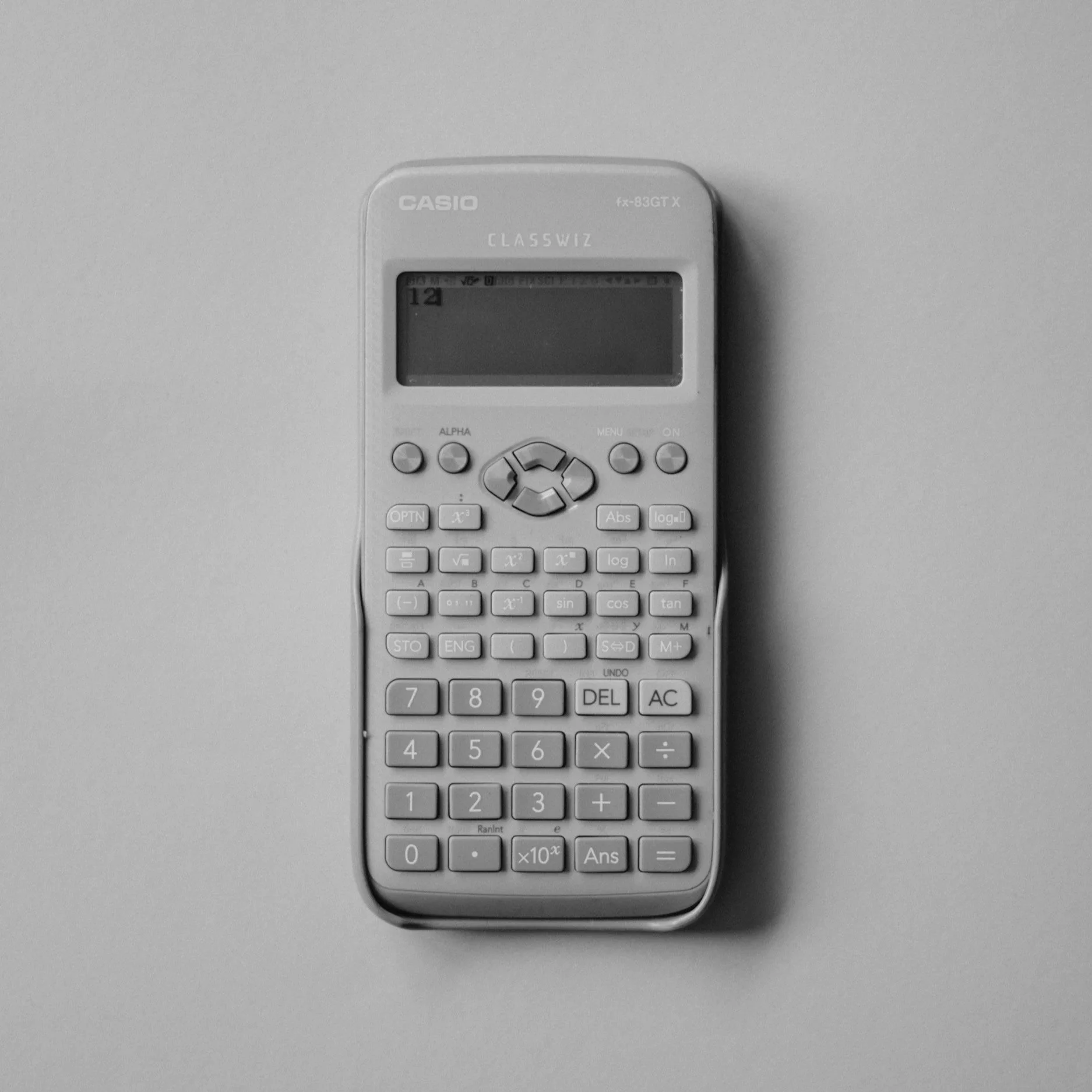
The Calculator Didn’t Kill Mathematics
During the Learning and Teaching Expo (LTE 2026) held in Hong Kong last month, I listened to speaker Charlotte Sloan of Renaissance Learning make a point worth sitting with: “The calculator never eliminated the mathematicians.”
Reflect back to when calculators first entered classrooms. They were fast and almost addictive. What used to require pencil and effort now provides an answer without friction. Yet mathematicians didn’t disappear. In fact, the need for mathematicians expanded. Moving away from only processing tedious numbers, they focused more on larger problems, more complex modelling, and deeper theoretical territory. The tool changed the work, but didn’t replace the worker.
Now, the question is: if AI is the calculator, can we make libraries and librarians become the mathematicians?

What Libraries are Competing With
Libraries today face a real, documented problem. Reading interest among young people is declining. For instance, a 2025 report from The Guardian found that reading interest among Americans has fallen consistently by 3 percent annually between 2003 and 2023 (Source 1). This partly shows a positive correlation of technology advancement in optimizing information retrieval, regardless of whether it is AI or not. Almost as if people have forgotten the slow process of building a reading life.
But getting information quickly is not the same as understanding it. When you receive an AI-generated summary, you receive a conclusion. You tend to follow the argument AI gives, without hesitation, fanning the critical mind of yours away. You read the conclusion, erasing all the interpretations, the cultural background, the context a book can give.
You know when you encounter a confusing line when you’re reading sometimes that you have to re-read three times? That friction and confusion shouldn’t been seen as a design flaw. Cognitive science research consistently shows that effortful processing produces stronger retention and durable understanding rather than passive recipients of pre-digested materials (Source 2).

Libraries: The Homes of Thinkers
Libraries were never only about the reading process. Consider why Norway, Denmark, Singapore, and other countries have invested significantly in building public libraries with the best designs possible. They aren’t spending the money on books only. They spend it on space.
Libraries are unlike other places in our cities and towns. Most of them (the public ones) are non-commercial and free for everyone to enter. Some museums charge ticket fees. Other public facilities require you to compete for a booking. The library asks only that you stay quiet. Also, only in the library do you get to learn a reading culture in society for free. In a city like Hong Kong where nearly every square meter is monetised, this is not a small thing.
Beyond that, the library serves as a community for several people. It often provides reading programs, community discussions, and book clubs to cultivate the diversity of perspectives. Through these activities, we also get to know the uniqueness of a human being with a wide range of interpretations. An AI-generated response isn’t wrong, but it’s not yours either. A reading culture that loses individual interpretation loses something harder to measure, but genuinely worth conserving.

AI as a Library’s Friend
None of this means libraries should be hostile to AI. The smarter move is adoption. AI can make catalogue systems better than before, help librarians identify gaps in collection, personalize reading recommendations for patrons, and reduce repetitive administrative work that takes time. The future of libraries should not be to resist technology. It is to be honest about what tech can and can’t do.
AI will not banish libraries, though it may pressure libraries to prove their value more clearly than before.That’s not a threat, but accountability. The institutions that survive today are the ones that choose to work together with AI and offer something more than what they can do.
If the calculator made mathematicians stronger, AI tools can do the same for libraries.
Sources
Lee, B. (2025, August 20). ‘Deeply concerning’: Reading for fun in the US has fallen by 40%, new study says. The Guardian. https://www.theguardian.com/us-news/2025/aug/20/reading-for-pleasure-study
Bjork, R. A., & Bjork, E. L. (2020). Desirable difficulties in theory and practice. Journal of Applied Research in Memory and Cognition, 9(4), 475–479. https://doi.org/10.1016/j.jarmac.2020.09.003