
Skill #3 of an AI-Age: Handwriting (Why Handwriting Still Matters for Digital Natives)
In an era of tablets and touchscreens, the "digital native" generation is growing up with the world at their fingertips—literally. While swiping and scrolling are now second-nature skills, experts and researchers are raising a red flag: in the rush toward digital literacy, we may be losing the foundational motor skills that only traditional pen-and-paper activities can provide.
The Science of the Swipe
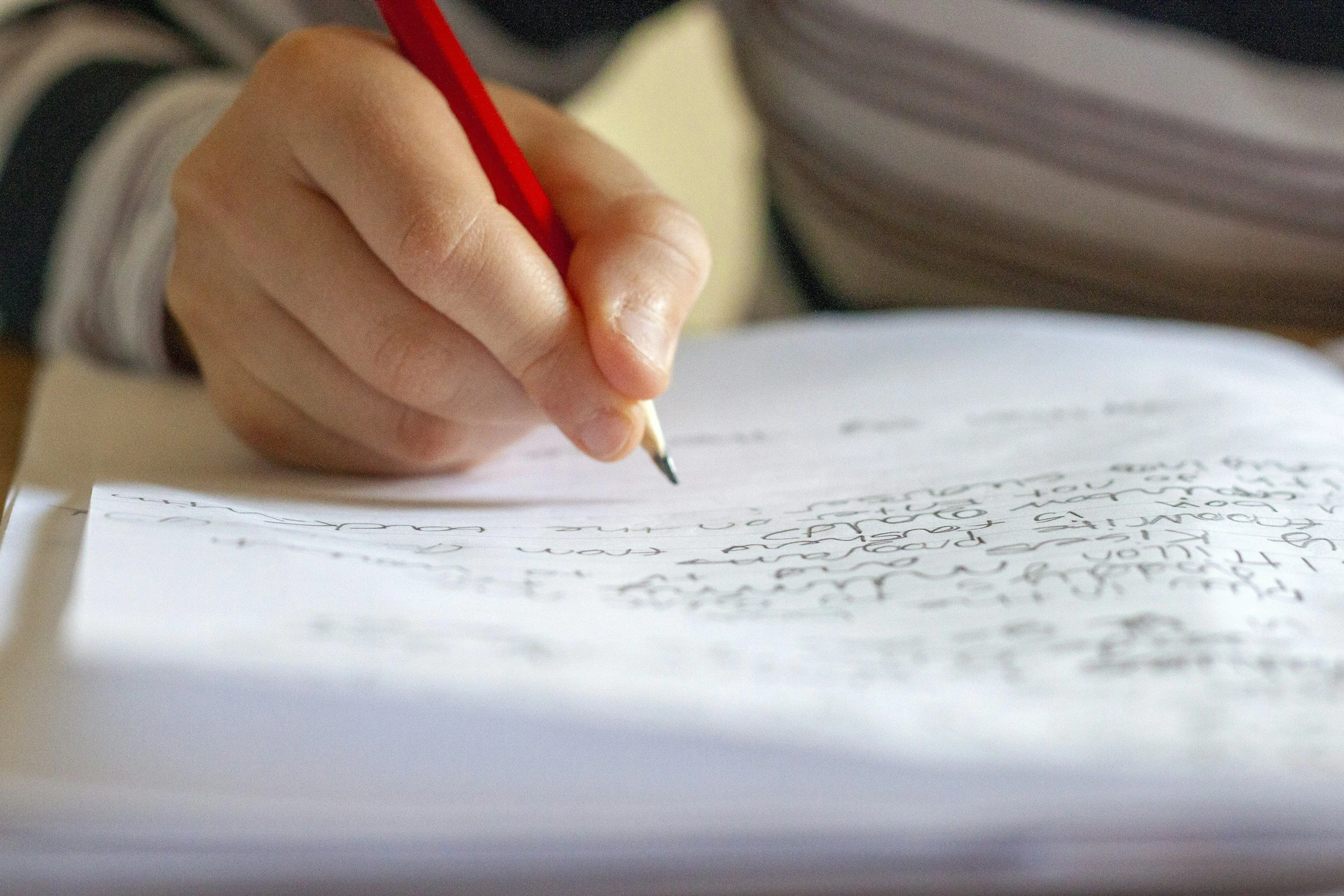
Recent research underscores the hidden cost of high-density screen use. A 2023 study found that preschoolers who avoided touchscreens demonstrated significantly superior fine motor skills, particularly in visual-motor integration and grasping. The study warns that the "displacement" of physical activities—like drawing, cutting with scissors, and building with blocks—by passive screen time can lead to measurable developmental lags.
An additional study that same year highlighted that, despite common belief, handwriting is a "complex activity" involving a sophisticated interaction between lower-level motor skills and higher-order cognitive processes; and that when children rely on the "low-effort" movements of a tablet—tapping and zooming—they miss out on the muscle strength and joint stability developed through the resistance of a pencil on paper.
This scientific concern is echoed by handwriting experts who view the skill as more than just "neat lettering." Handwriting is deeply tied to a child’s independence. As Sincy Thomas, Handwriting Coach and Founder, Alphabet Adventures, notes, the process of handwriting is part of a larger ecosystem of autonomy. When we encourage children to sharpen their own pencils, organize their stationery, and manage their own work, we are fostering the very fine motor skills and "bilateral coordination" that digital devices fail to stimulate.
We had the privilege to chat with Sincy about this topic earlier this semester and she reinforced the view that handwriting is not about getting letters “perfect” but rather about building independence and confidence through fine motor skills for young children. Read on for some of her insights:
Why is working on handwriting important?
[It’s about independence.] Let the children erase their own work, sharpen their own pencils, pack their own pencil boxes, and open their water bottles. Whether it is organizing their stationery, cleaning their table, or peeling bananas and oranges on their own, the list is endless. Nowadays, we do everything for them, [so kids don’t develop fine motor skills as easily].
Even something as simple as kids picking up their own toys before going to bed helps. The other day, I visited a home where a child wanted to mop the floor just like the maid was doing. We observed that the child was interested in this activity, which is great. Let the maid finish her work, and then let’s assign that same task to that 3.5-year-old child. [It provides] hand-eye coordination, grip, and wrist-hand movement. It also builds bilateral coordination because he is using both hands and, above all, gross motor skills because he is bending, walking backwards, and using his whole body.
Is handwriting something that requires professional intervention? What practical advice do you have for parents to encourage effective handwriting practice at home?
It’s important that parents understand we are doing this to improve fine motor skills and dexterity. When parents understand that intention, they must be mindfully present with the child while they are practicing. Being fully present without being distracted is vital.
We can do just one or two activities for five to ten minutes. If you consistently do such creative activities for ten days, you will notice a change. I typically improve handwriting in fifteen days, so I only have a short time with them; these small, consistent habits are what truly bring about change.
What kind of support can a handwriting coach provide?
Being mindfully present [as a coach to the child] is very important. We try to build from whichever level the child is currently at. I mostly make my notes on these small details; if we are truly observing them, we can see them improve one step at a time.
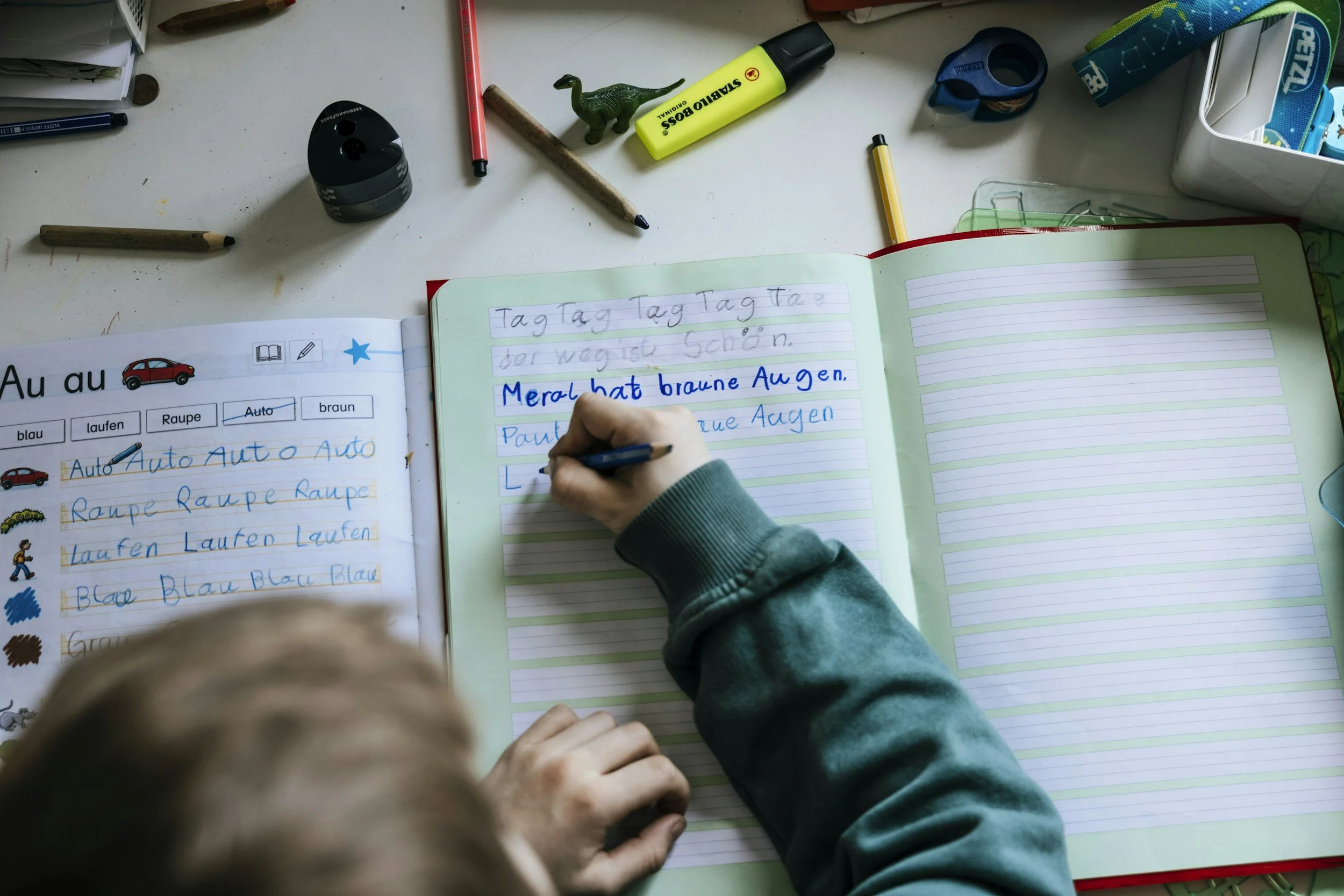
Handwriting is not an obsolete relic of the past; it is a vital cognitive exercise. While tablets offer convenience, they cannot replace the sensory-rich experience of manual labor and tactile play. By reclaiming the pencil, we aren't just teaching children how to write—we are giving them the physical and mental tools to navigate the world with independence and precision.
References
Abo-Zaid, Amira, et al. "Effect of Touch Screen Devices Use on Fine Motor Skills of Preschool Children." The Egyptian Journal of Hospital Medicine, vol. 91, no. 1, Apr. 2023, pp. 4390-95, https://ejhm.journals.ekb.eg/article_296397_6e37d9cda983379ddaf0386b3f02ee83.pdf.
Esenel, Şükran Nesrine, and Ayşe Pelin Özcan. "The Relationship between Fine Motor Skills and Handwriting Quality in Preschool Children." Children, vol. 10, no. 6, June 2023, p. 960, https://doi.org/10.3390/children10060960.