
Building the AI-Readiness Skill of Self-Efficacy in Your Child
Don’t Do Your Kids’ Projects for Them
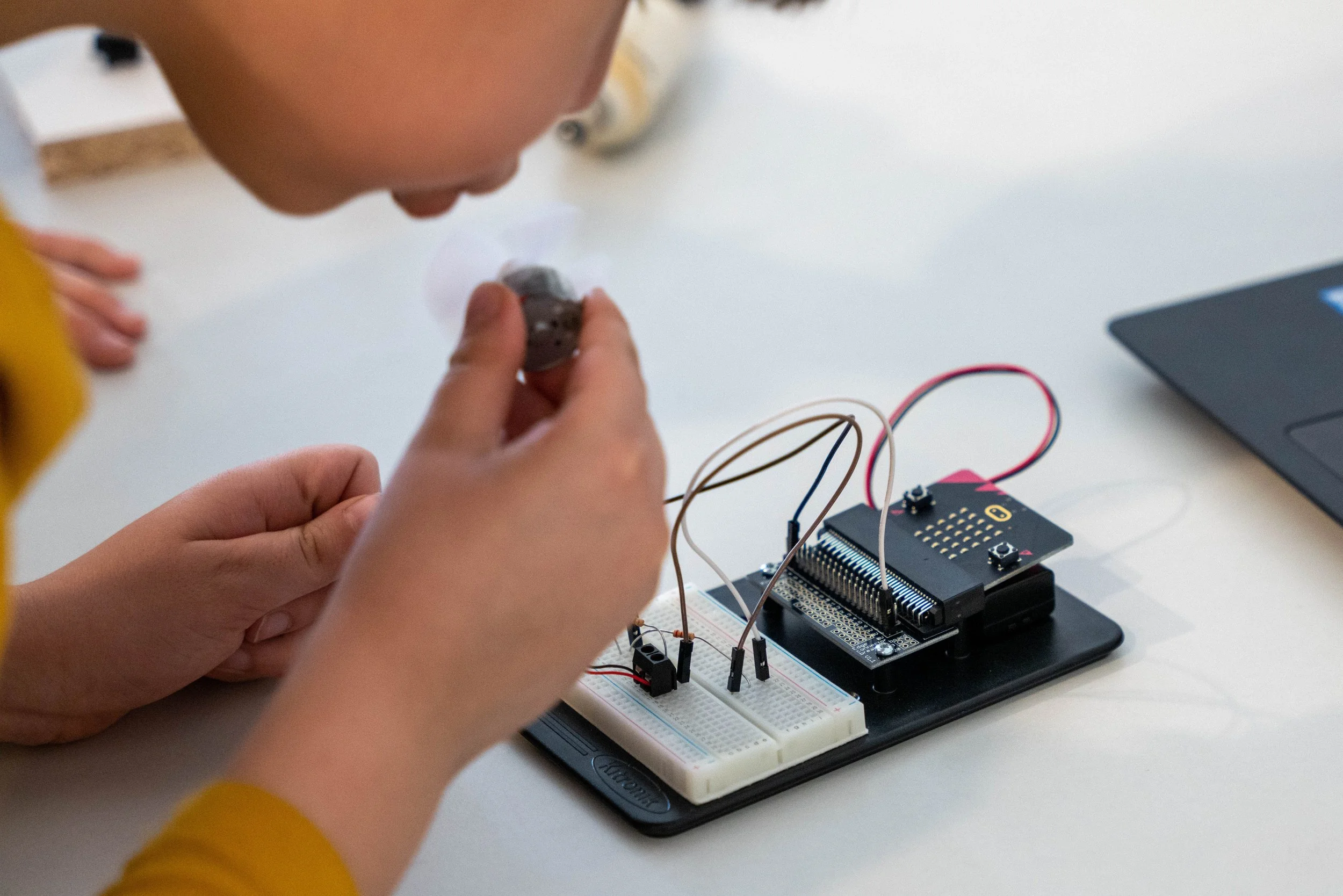
Playing WITH your child is different than playing FOR them.
I often see well-intentioned parents prematurely jumping into their children’s activities to make sure they’re done perfectly or correctly (according to the adult’s perception). Sometimes they jump in simply because they don’t want their child to experience discomfort or frustration.
This often happens before the child has the opportunity to even process their own emotional reaction to the frustration, or has the chance to try to problem-solve.
This is not ideal.
Not only does this behavior convey to the child that they should always expect perfection, it distances them from awareness of their own emotional state (of “feeling frustrated” or “feeling challenged”) and, perhaps most importantly, it robs them of one of the most amazingly fun parts of growing up: the opportunity to face an attainable goal, stretch or extend their abilities to achieve that goal, and feel the warm, affirming certainty of their own competency in that new thing.
In educational psychology, this feeling of self-affirmation and competency is called self-efficacy and is one of the growing competency areas linked to AI-readiness.
Why?
Because as we step into an AI-driven world, the nature of problem-solving is fundamentally shifting. When AI can instantly generate answers, code, or creative outputs, the human value lies no longer in memorising facts, but in knowing how to adapt in a rapidly changing environment and continuously leverage powerful technologies, including knowing how to manage ourselves when something doesn't work like we expected on the first try.
This is where metacognition (thinking about how we think) and self-efficacy (the proportionate sense of our own ability) become critical AI-readiness skills.

Why AI-Readiness Requires Metacognition & Self-Efficacy
Metacognition means thinking how to think or learning how to learn and is one of the core AI-readiness skills laid out in educational frameworks by global leaders in the field of AI literacy, including Dr. Rose Luckin and Dr. Vivienne Ming.
The idea is this: for children to be able to become AI conductors who can effectively and proportionately augment their work and learning using AI tools, they first need to be able to evaluate their own understanding and skills, identify gaps in the AI's logic, and pivot their strategy when the output falls short.
At the center of this cognitive process is having a sense of what you don’t know and how far you can safely extend your skills and decision-making (with and without AI augmentation). If you have a proper sense of your own self-efficacy, you will be able to continuously, correctly evaluate your own knowledge base, adjust your approach or strategy, and continue evolving and growing through successive stages of cognitive maturity across multiple domains.
A child with strong self-efficacy will have the metacognitive awareness to say: "My strategy didn't work. What can I adjust in my approach to get a better result or to learn better in this situation?"
If we constantly rescue our kids from frustrations (like a stubborn Lego piece or a confusing STEM kit step) we are inadvertently short-circuiting the exact emotional muscles they need to navigate the high-tech challenges of tomorrow. They must practice navigating confusion in their early years so they can confidently adapt to rapid changes in learning and work later on in life.

Cultivating the AI Quotient (AIQ) From Preschool
Preparing children for this future is exactly why we built Kigumi’s proprietary AI Quotient (AIQ) framework to help kids become AI-resilient. We believe that true AI-readiness isn't about teaching toddlers how to code; it’s about cultivating deep metacognitive and self-efficacy skills from preschool onwards by working with schools, parents and schools.
Long before a child ever uses an AI tool, they can build the foundational AIQ skills like emotional regulation and mistake-making. Using our human-centric AI ethics framework helps parents and educators transform everyday friction into moments of cognitive growth.
The next time you feel the urge to reach in and fix your child's project, take a breath and step back. You aren't just letting them struggle with a toy; you are letting them build the self-efficacy they need to lead in the future.