
What Season 2 of “Beef” Tells Us About Relationships in a Digital World

One recent weekend I was reclined in the darkened living room of a girlfriend watching the new season of Beef, with Carey Mulligan and Oscar Isaac. I’d loved the first season — with Ali Wong — and couldn’t wait to binge watch this one.
After 2 episodes — and a pause for dinner — I realised how much of the script involved showing what characters were texting each other. Character development didn’t only happen in the face-to-face interactions or experiences anymore; it happened online.
Like other shows in the past 15 years, this season of Beef is significantly made up of visual chat threads that hang in the air on one side of the screen. What people text or do on their phones in this show is of vital importance to understanding their unique form of idiosyncratic, self-destructive behavior. It’s entirely true to life, entirely relatable (and of course, enjoyable), if a bit frustrating (I personally think I have a limit to wanting to watch people texting other people and calling that entertainment).
But one character’s texting habits stuck with me far past this weekend because of how tragically comedic and real-to-life they were. The fantastic Carey Mulligan, playing a long-married housewife whose marriage has fallen on hard times and emotional alienation — he sleeps separately in his man cave; they haven’t done you-know-what for “…almost a year! Well, okay, 11 months!”; you get the idea — keeps multiple flirtatious chats with various potential or past partners on different apps on her phone, flicking through WhatsApp, IG DMs, and SMSs as casually as one would flick through hangers at the local vintage store.
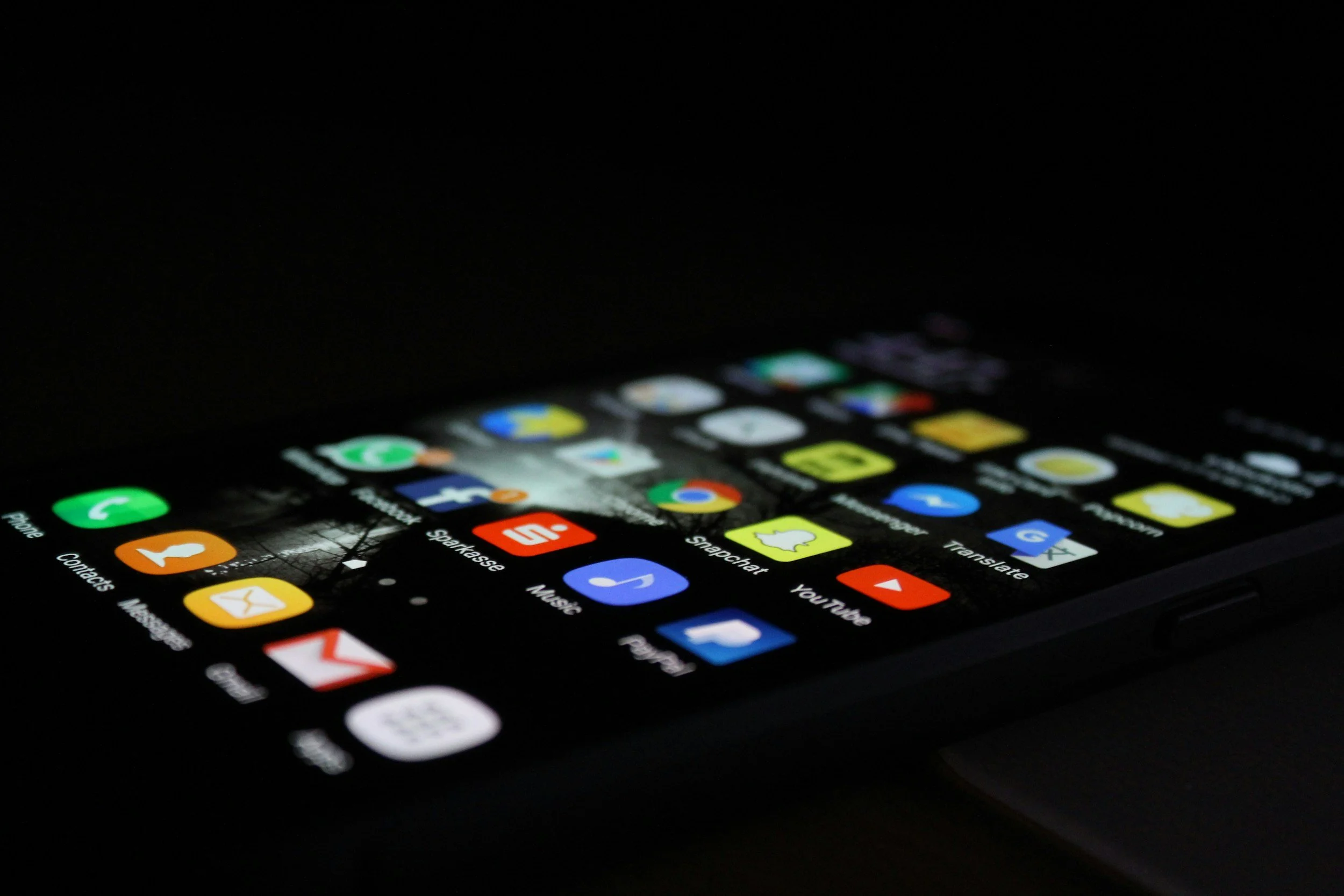
On a whim, she blocks men who have briefly irritated her or caught her in a bad mood, or blocks them when a hotter, younger prospect comes along, then unblocks the lesser candidates when the prize stallion doesn’t pan out.
She does all of this with a clear sense of boredom, blocking and unblocking with one hand while throwing the ball to her tiny, sweatered dachshund in their affluent California suburb.
What I was fixated on in this wasn’t the infidelity (that’s for a different post on ethics). I was captivated by the character’s use of technology: how Carey Mulligan’s character used different apps and socials to carefully manage her emotional tethers to these realms of possibility, her lifelines to fantasy worlds where she was completely in control of whether or not to respond to the potential beau.
The scenes of her perfunctorily swiping through the apps in order to scratch her itch for attention, reminded me of a quote from Dr. Sherry Turkle:
“In a life of texting and messaging, those on that contact list can be made to appear almost on demand. You can take what you need and move on. And, if not gratified, you can try someone else.”
-pg. 177, “Alone Together” by Sherry Turkle
These scenes in Beef highlight what many of us digital native adults have come to accept: that it’s normal to treat others as instrumental.
Instrumentality isn’t always bad, but it’s a problem when it becomes default, normalised behavior that characterises our relationships. I think about it as part of the key symptoms of digital risk:
Symptom #1: When the frictionless relationships we’ve developed with tech causes us to deprioritize the messiness of human relationships
Main thought: “Connectivity leads to lack of connection”
Technology allows us to replace the messy, unpredictable pressure of real-time human connection with digital interfaces we can control and edit. This retreat into a digital life — where we keep others at an “arm’s reach” via text and screen — actually diminishes our social courage. Ultimately, by opting for the safety of curated interactions, we become fearful of the raw vulnerability revealed in physical life and even the simple intimacy of a telephone call.
Symptom #2: When we start to escape into the illusion of control that tech devices and interactions gives us.
Main thought: “Control is illusory and comforting”
By prioritizing the control and “risk-free” nature of digital or robotic interactions, we find comfort in environments where we can always get things right. However, this habit of mind ultimately diminishes us; by acclimating to the reduced emotional range of digital communication or machines, we risk losing our capacity for the complex, overwhelming, and deeply necessary challenges of life with other people.
Symptom #3: When we start to see people as instrumental.
Main thought: “We feel decreasing responsibility in our relationships to each other”
Technology increasingly allows us to treat both machines and people as commodities that exist solely to satisfy our immediate emotional needs. Consequently, we begin to objectify our connections, reducing complex human beings into convenient sources of validation that can be easily replaced.
Symptom #4: When you feel constantly on call or perpetually available.
Main thought: “Being constantly available leads to less meaningful connections.”
The relentless demands of devices and interactions depersonalizes our interactions and forces us into exhausting online performances, often stripping away the time needed to focus on what truly matters. By sacrificing solitude for continuous connection, we can lose the vital space required to think our own thoughts.
Symptom #5: When it’s increasingly hard for you feel present (without a device).
Main thought: “Stillness feels uncomfortable if we are conditioned to react”
The constant stimulation of the digital world has conditioned us to feel anxious in stillness, making true solitude feel like an uncomfortable void that should be avoided. To counter this, we must consciously trade high-volume, hollow digital interactions for fewer, deeper, and more meaningful face-to-face connections.
For the upcoming installations where we talk about how to manage each of these risks (as an individual and particularly as a parent), follow our weekly posts or join one of our summer tech detoxes by emailing info@kigumigroup.com.