
Beyond Digital Literacy: Navigating Ethical AI Companionship in Hong Kong Schools
Moving from Discipline to Dialogue: Integrating Social-Emotional Development into Gen A’s Digital World

Last Thursday, the Mental Health Association of Hong Kong (MHAHK) released an official report that mental health levels amongst Hong Kong residents have reached an all-time low (the “worst mental health levels since MHAHK began conducting the biennial study in 2012”).
Specifically, Gen Z (18 to 24 years) were the worst off, with 43.5% reporting moderate to severe depression and 32.7% reporting moderate to severe anxiety.
Perhaps most importantly for Kigumi’s digital wellbeing work, as one news article describes, “MHAHK noted a positive correlation between Gen Z’s average screen time and their depression and anxiety scores, indicating that excessive use of electronic devices is closely associated with emotional distress.”
This is one of the exact reasons Kigumi exists - not as a mental health platform, but as a social enterprise that starts conversations with AI-natives about digital wellbeing and social emotional development in an AI-world when they’re young. We follow several key principles / beliefs to achieving this:

#1: For Gen Z and A, “digital literacy” isn’t enough.
They grow up with social emotional connections to and through their tech devices and deserve an integrated digital wellbeing curriculum that spans home and school.
#2: Gen Z and A students deserve a way to talk about these emotional experiences and attitudes they’re developing towards tech.
We hear from schools and parents a lot that they “don’t know what their kids are doing online” and can’t catch child safeguarding issues until they get too big to handle. Pre-teens and teens hide things - it’s part of their natural development to want more privacy. The answer isn’t disciplining or shaming them when things go wrong online. They deserve safe platforms and spaces for them to talk about the things they’re going through when it comes to online experiences so that they know that adults will help them…otherwise, the commercial AI chatbot is going to be very tempting!
#3: Digital wellbeing and healthy relationships with tech start at home, not at school.
Digital parenting education is key, and starts with parental role modelling beginning from early childhood about what the role of tech devices is at home.
Are you using screens as a babysitter, as a band aid for uncomfortable moments, or as a reward for good behavior? Are you role modelling putting your phone away during family time? Are you showing your child what it means to have a healthy balance of on and offline activities and demonstrating when it’s important to disconnect from the digital world?
Research findings like this (that have been coming out in different variations globally for several years) are part of the reason we created an entire curricular area on KiguLab called “Ethical AI Companionship”: a category of trainings for 8+ year olds that is entirely focused on how to develop balanced relationships with the range of AI chatbots that our children will have to learn, work, and potentially socialise with throughout their lives.
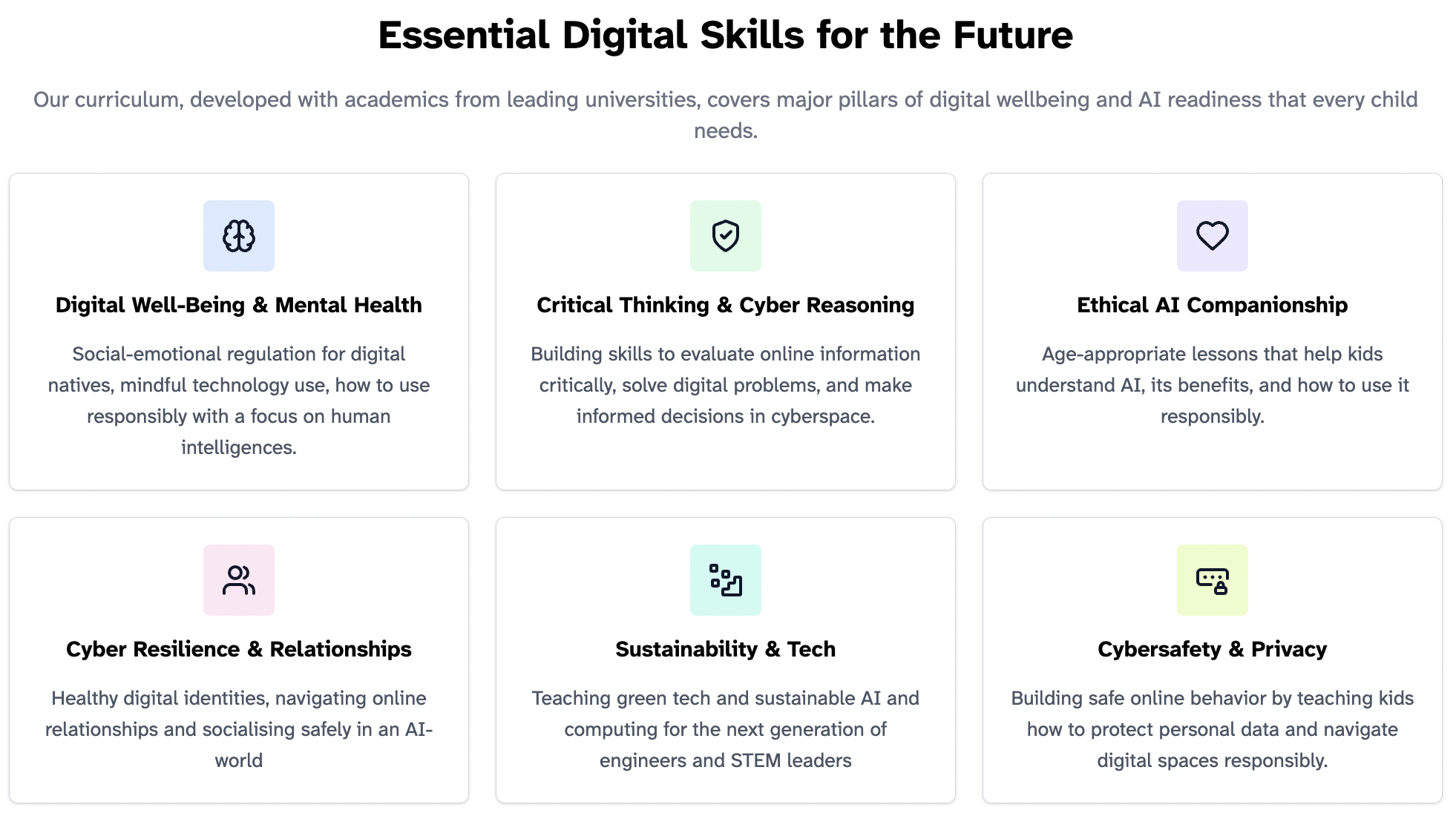
AI is already a companion for learning and socialisation for many of our children - it’s up to us to make sure that they have the training and skills to rise to meet this future while staying safe.
Learn more about our Digital Parenting packages (English and Chinese) or sign up for 2-week free trial of KiguLab for schools to test our digital wellbeing curriculum in English and Chinese.
References
Hong Kong Free Press. (2026, March 6). Over 40% of Hong Kong’s Gen Z suffer from moderate to severe depression, survey finds. Hong Kong Free Press. https://hongkongfp.com/2026/03/06/over-40-of-hong-kongs-gen-z-suffer-from-moderate-to-severe-depression-survey-finds/