4 Reasons Students Overuse AI (And What Educators Can Do)

Over the last year we’ve been continuing to collect testimonies from students around the world about why and how they use AI for academic work. Most of these students are 12-28 year olds from high-performing, competitive academic environments in Asia or the US, but their schools and preparation with AI differ drastically: some receive heavy training in AI and critical thinking, others have schools who put their heads in the sand and have blanket “no AI rules.”
Thus far, based on these testimonies we’ve mapped out a set of conditions that contribute to students’ over-dependency on AI.
Whether you’re a teacher who is more on the side of the spectrum of limiting AI or you’re a teacher who is more welcoming to AI in your classroom, these following factors are major, common ones shaping the culture of AI use for your students.
Managing AI Dependency in the Classroom: 4 Factors Shaping Student Habits
#1: Perception of time scarcity or time poverty
When students feel they’re rushed they become more willing to cut corners. (Coincidentally, so do the rest of us.) We hear a lot from students at high-pressure institutions (like Ivy League universities or feeder schools to those universities) who tell us there is so much on their plate at any given time that they have to use AI more than they know they should in order to keep up with professors’, teachers’ and parents’ expectations.
What it sounds like from students: “There’s just so much to do.” “I just needed to get it done, I have so much to finish.”
#2: Performance pressure from school, parents and peers
When students aren’t confident in their own abilities or feel they aren’t “good enough” due to an overemphasis on grades they often resort to trying to find the “right” or quick answer or simply prioritise “getting the grade.” Performance and grades are certainly important but should be balanced (and tempered) with a student’s understanding of their own learning journey and commitment to self-mastery. (This will not be true in every single assignment, of course.) When there is an imbalance in this equation it can result in students forgetting about the long-term benefits of learning and self-mastery and disproportionately focusing on short-term performance indicators (that’s my fancy phrase for “grades”).
What it sounds like from students: “I don’t know if my own work is good enough.” “I’m just not good at [coding]/[writing]/[English] so I shouldn’t try, I’ll just jump to AI to get it done”
#3: Changing baseline for AI use
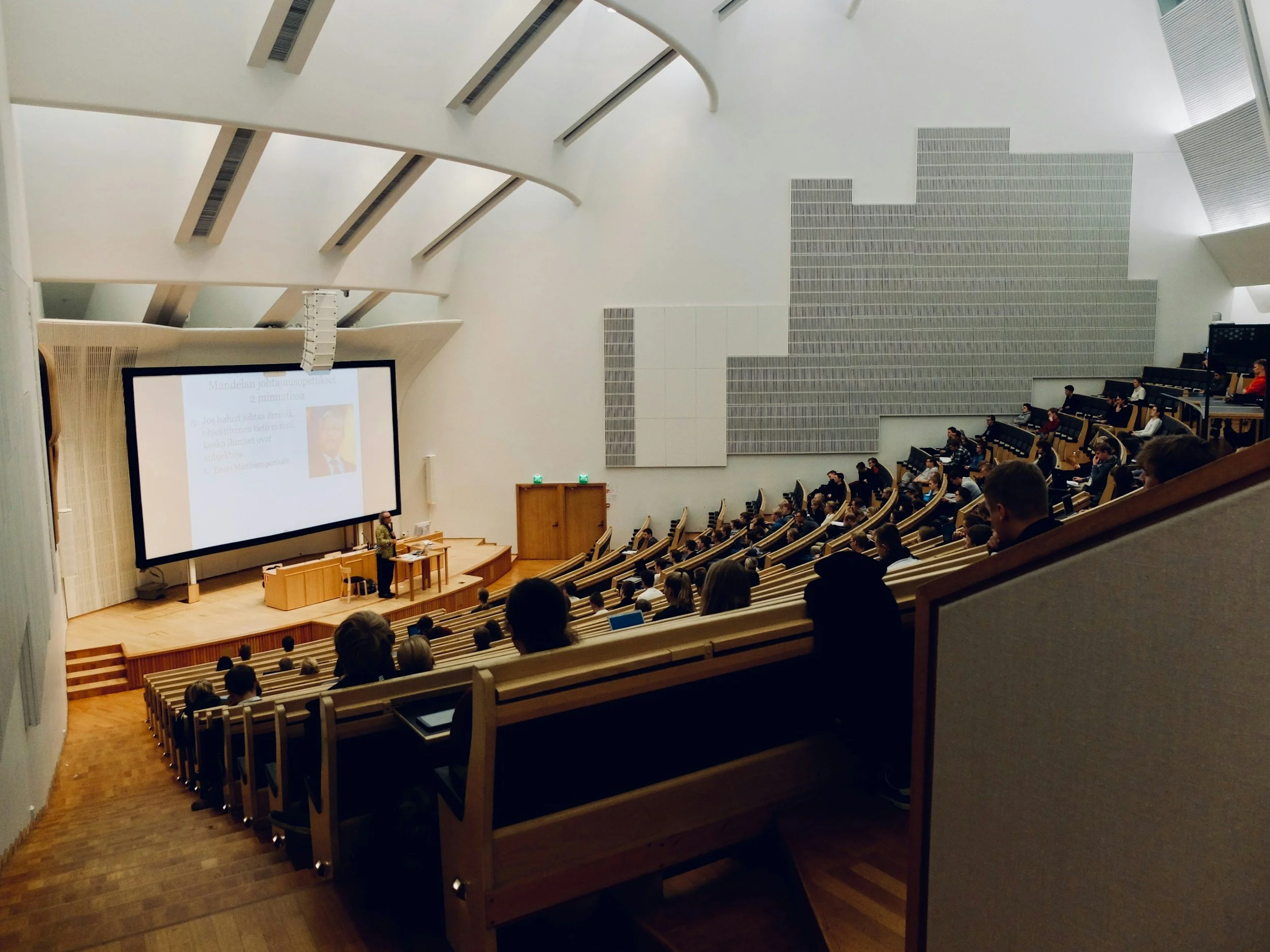
Students tell us increasingly that because so many of their peers are using AI for assignments that they also have just started doing it to keep up. It’s not because they want to - they have concerns about the impact on their critical thinking and personally would abstain from using it under most circumstances. But when their professor or teacher hasn’t defined appropriate AI use guidelines and allows students to use it as they want, even more cautious students are pressured to start using it too, because they recognise that the grading baseline for them is now for AI-enhanced products. Even middle school students are smart and can figure out when it’s time to play the game - it’s us adults who need to make it so that they don’t need to.
What it sounds like from students: “If all my peers are using AI then I also need to in order not to be disadvantaged.”
#4: Lack of external guardrails from teachers or professors
When educators don’t set clear expectations students are left in risky uncertainty, which detracts from trust and breeds self-doubt. Lowered trust and self-doubt in turn breed risky and experimental use of AI.
What it sounds like from students: “Teachers just say “don’t use it” but that’s not helpful because I want to learn how to use it safely.” “My professor allows AI on some assignments but doesn’t tell us exactly how to use it, so everyone is using it differently and it doesn’t feel fair when we’re graded the same way.”

Reclaiming the Classroom: Steps to Foster AI Intentionality
What Educators Can Do
If you’re an educator, we recommend you look at each of the above bullet points and use them:
To identify where and under what conditions AI dependency is happening in your classrooms
To categorise which of these conditions is within your control / your classroom’s control and which are less in your control
To incorporate these into your own classroom norms by discussing each with students in groups and gathering student voices on how to address each bullet point
To work backwards from these rules to pre-emptively design classroom environments and set expectations using some of this language

Beyond the Grade: How Parents Anchor a Healthy AI Culture
What Parents Associations Can Do
If you’re reading this as a parent, one last thing to note. There is a major responsibility here for you - your role in scaling back AI dependency is critical. The above bullet points are symptoms of a larger school culture that is largely shaped by you, the parent.
When your school’s culture conveys to students and teachers the message that children are quantifiable products, principals and administrators will adapt to your short-term demands in order to ensure financial sustainability for their school. Teachers will respond in turn because they need to keep their jobs. (Those who don’t agree with short-term outcomes will simply quit, creating brain drain and taking your institutional capital with them). Perhaps most tragically, your children will also pick up on your short-term expectations for their learning and begin to internalise these standards. Together, these actions will create a self-reinforcing cycle that encourages AI misuse and over-dependency.
As a parent, the expectations you set for your school and children and the messages you send them about the purpose of learning and the importance of long-term growth and self-mastery are the root of teaching effective AI-augmentation.
We can create a more responsible AI-augmented classroom for our children, one where they can be the best versions of themselves: with and without proportionate, intentional AI use.
But it starts at home, with the messages we send them about what success looks like, why we love them, and what we want them to gain every day when they get out of that car and run into class. We want them to know that they are more than a grade. More than an award. More than an achiever.
We want them to know that we love them simply for being them.